Pumpkin Cheesecake Cookies: Stop Leaks, Cakiness, and Weird Spread With One Moisture Logic
Table of Contents
Table of Contents
Pumpkin cheesecake cookies are the kind of cookie that sounds straightforward until you actually bake them: pumpkin dough is already wet, and cream cheese turns into a soft, pressurized filling in the oven.
If you’ve ever watched your filling leak out or ended up with a thick, cakey cookie that barely tastes like cheesecake, the problem isn’t your skills—it’s the missing logic in most recipes.
What You’ll Learn:
- How to control pumpkin moisture so the dough can actually hold a filling.
- How to Portion and Freeze Cream Cheese to Prevent It from Migrating.
- Three tested approaches (stuffed, soft-batch, and swirl) with clear trade-offs.
- A troubleshooting checklist for the most common failures.
This approach builds on the same “moisture → spread/texture” principles covered in the ultimate pumpkin oatmeal cookies guide (foundation technique), and it also connects naturally to pumpkin cookies recipes (broader variations) and healthy pumpkin oatmeal cookies (lighter swaps when you want a different texture target).
This article comes from real kitchen practice, not perfect theory. I’m sharing what actually worked for me—and what didn’t—so you can understand the result before you start.
Why do pumpkin cheesecake cookies go sideways
Pumpkin cheesecake cookies are a “two-moisture-system” cookie: pumpkin brings a wet dough, and cream cheese brings a filling that softens and wants to flow before your cookie structure fully sets.
That’s why recipes that only say “freeze the filling” can still fail—you can freeze perfectly and still leak if the dough is too wet to seal, or if the butter is too warm and the cookie spreads before it firms up.
A useful mental model from culinary school: cookies succeed when the dough sets before the fat melts too far and the filling turns fluid.
So the real goal isn’t “add more flour” (which often turns them cakey)—it’s managing timing: chill, moisture removal, and seam strength.
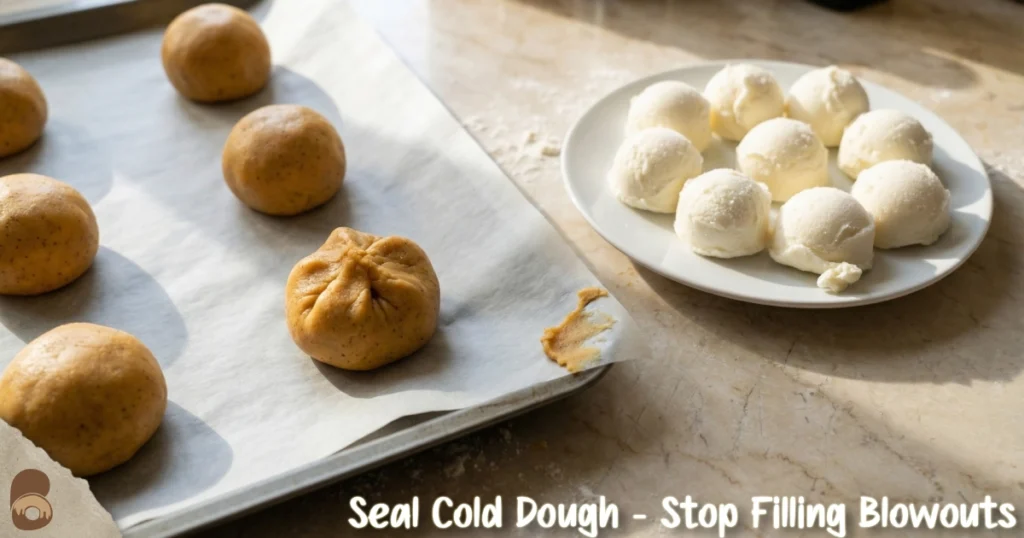
Pumpkin cheesecake cookies, moisture science (the part recipes skip)
Cream cheese has a regulated moisture limit (in the U.S., not more than 55% moisture), which explains why it softens so readily when heated.
Now combine that with pumpkin purée, which is “primarily water” even in canned form, and you can see why dough that feels fine at room temperature can collapse once heat hits butter + water + sugar.
One clean analogy: imagine trying to patch a tiny hole in a water balloon while the balloon is warming up in your hands—your “patch” (cookie dough seam) needs to be strong and cold long enough to hold.
There’s more chemistry here, but you don’t need it: for results, just remember that chilling delays spread, and reducing free moisture strengthens the dough’s ability to seal.
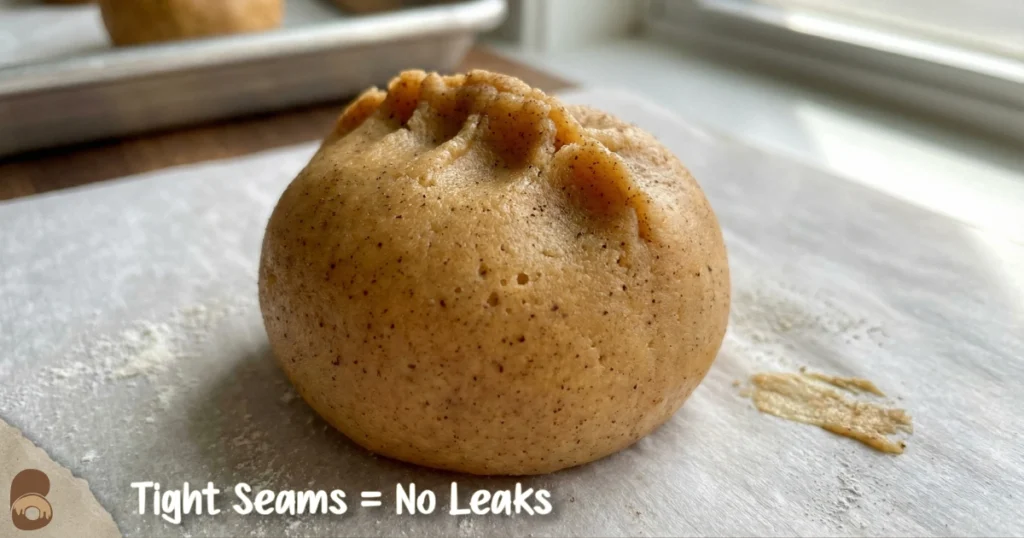
Three methods for pumpkin cheesecake cookies (choose your trade-off)
These are three practical ways to get the same flavor goal—pumpkin + warm spices + tangy cream cheese—without gambling on unexplained steps.
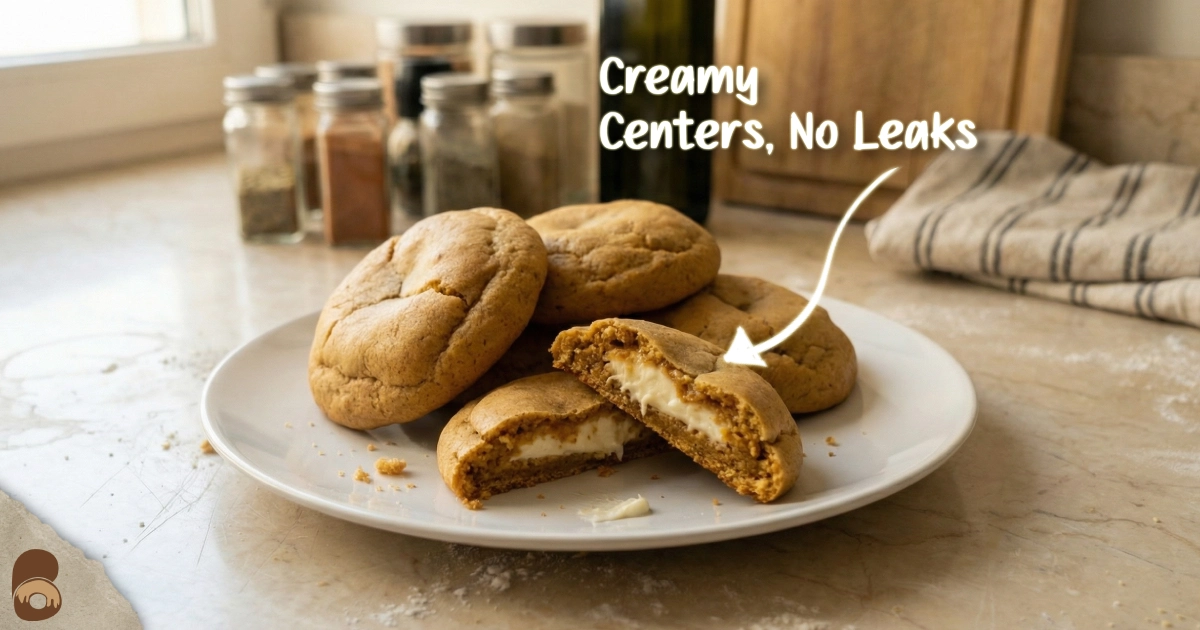
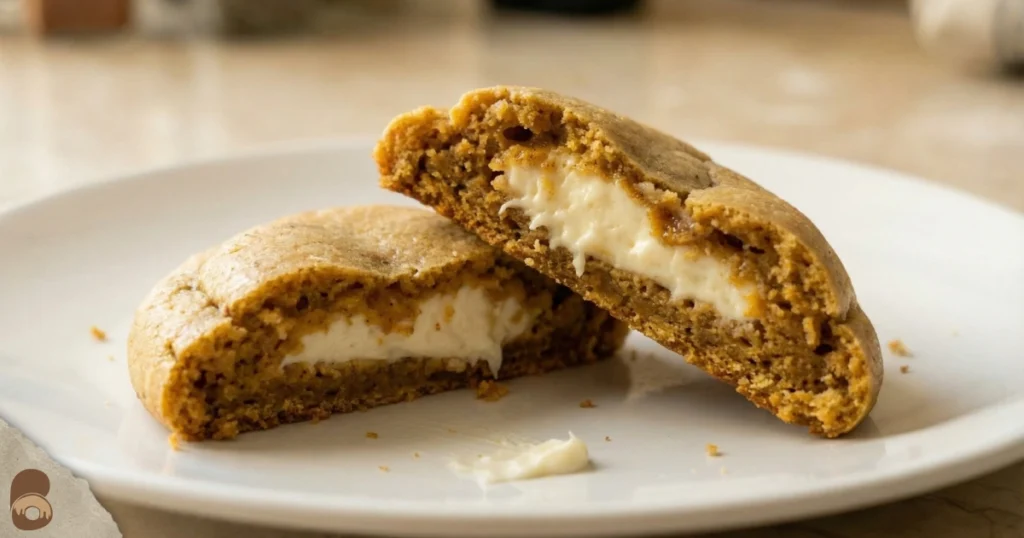
Method 1: Stuffed (best “cheesecake center” payoff)
Use this when you want a clear cream cheese core and don’t mind a little prep time.
Key moves: portion filling small, freeze hard, blot pumpkin if your dough seems loose, and chill shaped cookies so seams stay tight in the first minutes of baking.
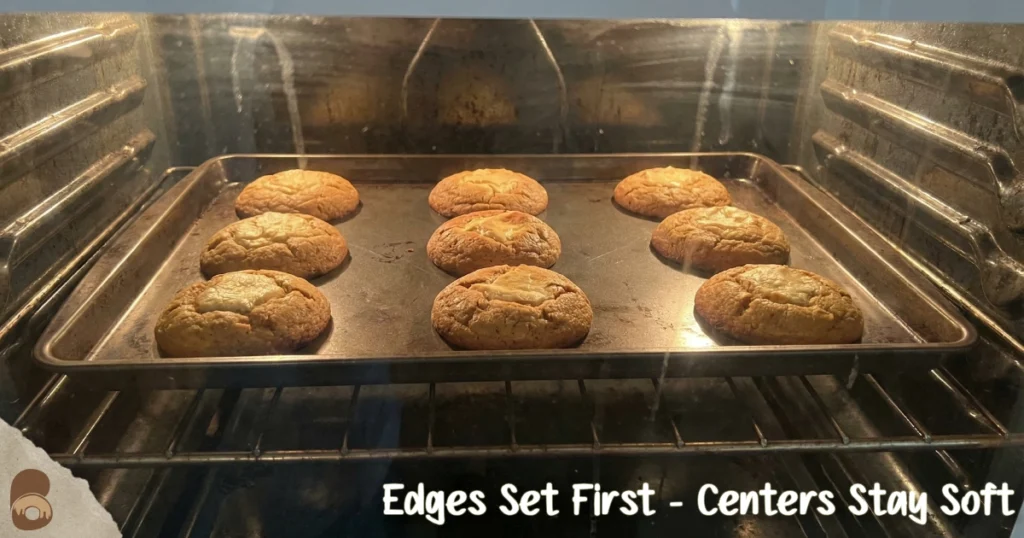
Stuffed cookie setup (quick guide)
| Step | What to do | Why it matters |
|---|---|---|
| Portion filling | 1 tbsp each | Too much filling increases pressure and blowouts. |
| Freeze filling | Until solid | Delays softening so the dough can set first. |
| Seal seams | Pinch + smooth | A sealed seam prevents early leaks. |
| Chill shaped cookies | 20–30 min | Colder butter = less spread early on. |
One limitation (real kitchens): if your kitchen is warm, the dough softens fast while shaping, so chilling between batches matters more than “perfect wrapping technique.”
Method 2: Soft-batch (easier shaping, softer texture)
Use this when you want a plush, cakier pumpkin cheesecake cookie and you don’t want to fight seam sealing.
Instead of a big center, use smaller cream cheese pockets or chips of frozen filling, then bake a little hotter (within normal cookie ranges) so the cookie sets faster and spreads less.
Method 3: Swirl (cream cheese flavor, no leak risk)
This is the “I want the flavor, not the engineering” method.
Swirling softened cream cheese into the dough removes the pressure point of a stuffed center, so you’re mostly managing spread like any other pumpkin cookie.
If you want a separate deep-dive on flavor building (not just structure), the blooming spices in butter technique makes pumpkin dough taste louder without adding more spice volume, especially when pumpkin flavor gets muted by dairy.
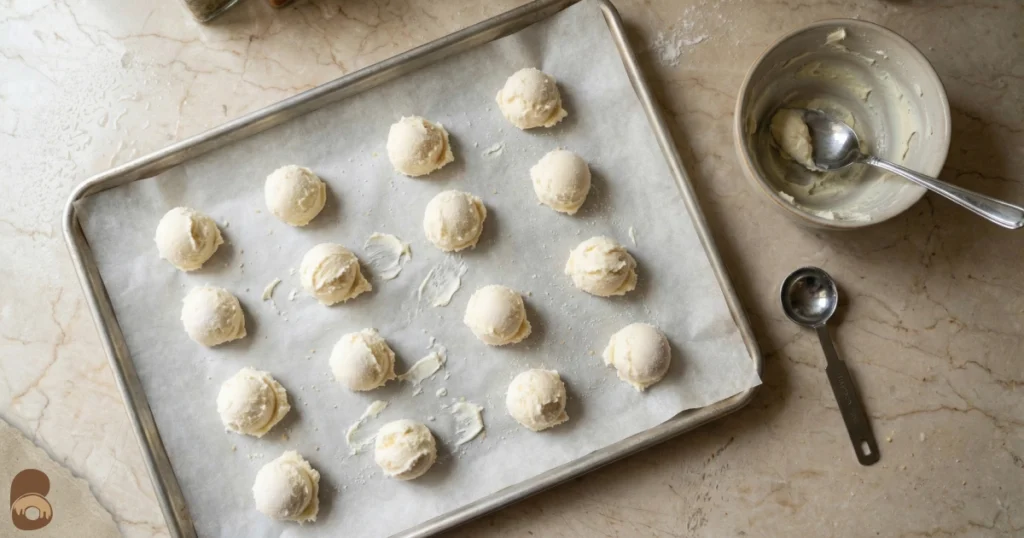
Pumpkin cheesecake cookies troubleshooting (fix the exact failure)
If something went wrong, treat it like a clue—not a mystery.
Problem: Filling leaked onto the pan
Root cause: Filling softened before the dough structure set, or seams opened as the cookie spread.
Fix: Freeze filling harder, chill shaped cookies longer, and bake on a fully cool sheet so the bottoms set correctly.
Prevention: Keep filling portions smaller and avoid overly soft butter during mixing.
Problem: Cookies came out cakey (not chewy)
Root cause: Too much flour (often from “fixing stickiness”), or the dough needed moisture control instead of flour.
Fix: Control moisture first (blot pumpkin if it looks watery), then measure flour gently and stop mixing once flour disappears.
Prevention: Chill dough so it’s workable without extra flour.
Problem: Cookies spread too much
Root cause: Warm dough/butter, lower effective bake set time, or too much sugar for the dough strength.
Fix: Chill-shaped cookies and consider a slightly hotter bake (still in typical cookie temperature ranges) so the structure sets sooner.
Prevention: Avoid placing dough on a warm pan; rotate pans if baking multiple batches.
Problem: The cookie cracked open around the filling
Root cause: Dough layer was thin at the seam, or the filling portion was too large and “pushed” its way out as it heated.
Fix: Add a little extra dough at weak spots, then pinch and smooth the seam again before chilling.
How do these connect to your pumpkin cookie foundation
If regular pumpkin cookies feel unpredictable, it’s usually the same moisture story—pumpkin changes texture and spread, and the recipe often doesn’t explain how to adapt.
That’s why the baseline techniques in the ultimate pumpkin oatmeal cookies guide matter here: once you understand moisture control and set timing, you can apply the same logic to stuffed cookies.
For broader flavor directions, pumpkin cookie recipes help you branch into variations without adding a second moisture system.
For lighter texture goals (and a different moisture/fiber balance), healthy pumpkin oatmeal cookies are the next logical stop.
FAQs
Q: Do pumpkin cheesecake cookies need refrigeration?
Because cream cheese is a dairy filling, store pumpkin cheesecake cookies in the refrigerator for food safety, then bring to room temp before eating for the best texture.
Q: Can I use low-fat cream cheese for pumpkin cheesecake cookies?
Low-fat cream cheese generally contains more moisture than full-fat styles, which makes leaking more likely and freezing less effective for stuffed cookies.
Q: Why do my pumpkin cheesecake cookies look done but feel soft in the center?
Chilled dough and a cream cheese center can keep the middle feeling soft even after the edges set, so rely on set edges and a short rest on the pan to finish firming.
Q: Can I use homemade pumpkin purée?
Homemade pumpkin purée is often wetter than canned, so it usually needs blotting/straining to avoid extra spread and weak seams in stuffed cookies.
Conclusion
Pumpkin cheesecake cookies get reliable when you treat them like a timing-and-moisture problem: keep the filling small and cold, keep the dough cold enough to seal, and let the cookie set before it spreads too far.
Next bake, pick one method (stuffed, soft-batch, or swirl) and commit to the matching moisture strategy instead of “fixing” stickiness with extra flour midstream.
For more structure-first pumpkin baking logic, revisit the ultimate pumpkin oatmeal cookies guide, then explore pumpkin cookies recipes when you want more variations, or healthy pumpkin oatmeal cookies when you want a lighter direction.
Keep creating pumpkin cheesecake cookies. Follow @BakeOrbis on Pinterest for daily baking tips, troubleshooting guides, and techniques that actually work in real kitchens.
Share your experience and help others!
Tried this recipe? Leave a rating and make someone’s day tastier
Be the first to rate this recipe and help others discover it!