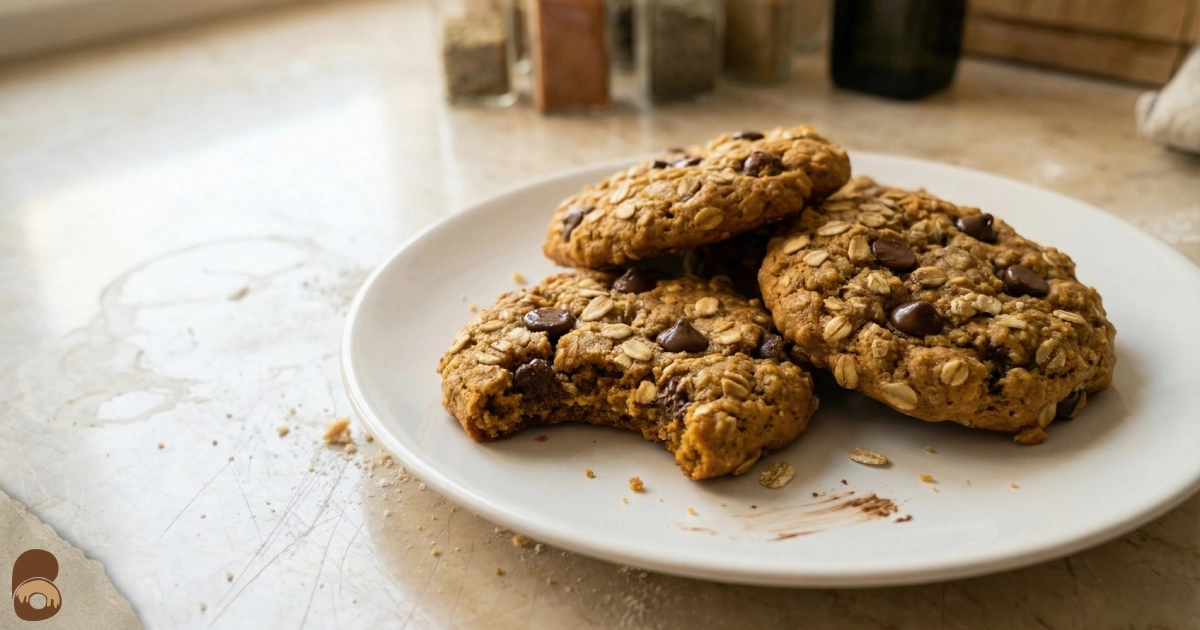
Oatmeal Pumpkin Chocolate Chip Cookies: Proven Fix for Cakey Texture
Table of Contents
Table of Contents
Oatmeal pumpkin chocolate chip cookies can become cakey for one reason: pumpkin purée behaves like a liquid ingredient, but most recipes treat it as a flavor add-in, so the wet-to-dry logic is missing.
If your last batch baked up puffy-soft and a little spongy, that’s not a skill issue—it’s an “unexplained recipes” issue.
What You’ll Learn:
- How to remove pumpkin’s “free water” so your dough behaves like cookie dough, not batter.
- A rolled-oat + flour balance that holds chocolate chips without spreading.
- A chill strategy that actually matches the hydration level of your dough.
- Fast troubleshooting for flat spread, cakey crumb, and sinking chips.
This recipe logic builds on the moisture and oat behavior foundation in the Ultimate Pumpkin Oatmeal Cookies guide.
This article comes from real kitchen practice, not perfect theory. I’m sharing what actually worked for me—and what didn’t—so you can understand the result before you start.
Why do oatmeal pumpkin chocolate chip cookies turn cakey
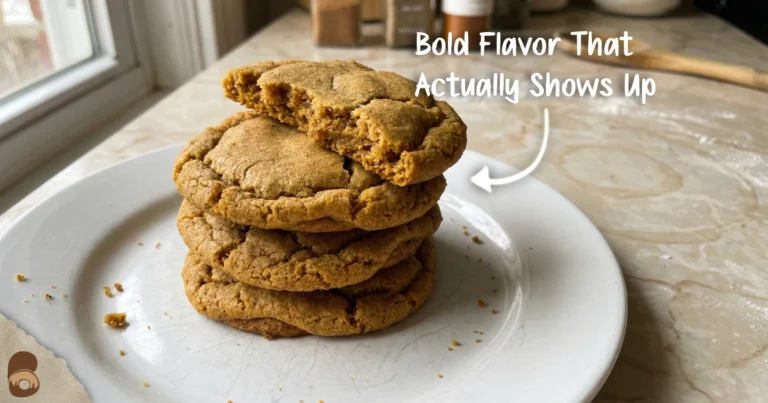
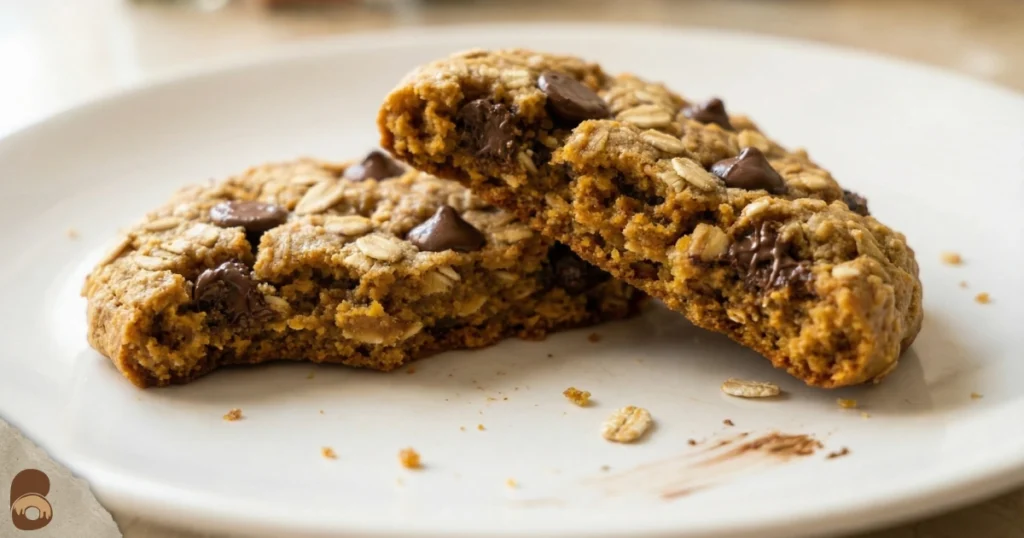
Oatmeal pumpkin chocolate chip cookies are basically a tug-of-war between structure (flour + oats) and moisture (pumpkin + sugar + eggs). When the dough has too much liquid for the dry ingredients to bind, it sets up more like a quick bread: soft, airy, and cake-crumb tender instead of chewy.
The sneaky part is pumpkin purée: it’s roughly 85–90% water, so “just adding ¾ cup pumpkin” can quietly flood a dough that was written like a standard cookie formula. Once that happens, the cookies can puff, look done, and still feel spongy because the interior is setting like batter, not dense dough.
The missing logic most recipes skip
- Pumpkin isn’t only flavor and color—it’s hydration.
- Oats absorb liquid over time (not instantly), so the dough texture at minute 5 is not the final texture at minute 60.
- Chocolate chips add weight; if the dough is too loose, they sink and exaggerate the “wet middle” feeling.
Moisture control for oatmeal pumpkin chocolate chip cookies (the part that changes everything)
In culinary school labs, the fastest way to “debug” a cookie is to ask one question first: Is the wet-to-dry ratio predictable? With pumpkin cookies, it often isn’t—unless you remove excess moisture before mixing.
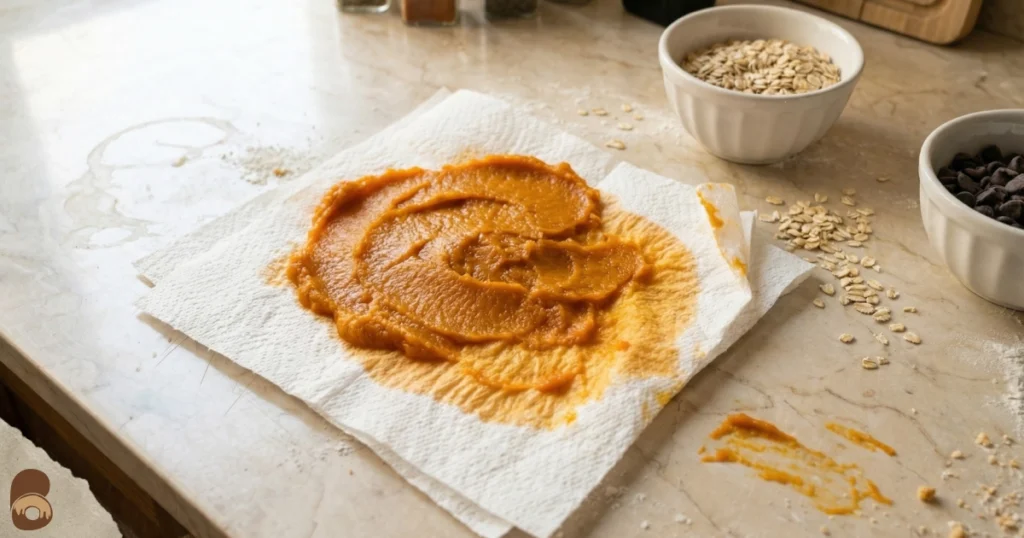
Step 1: Blot the pumpkin (2–3 minutes minimum)
BakeOrbis pillar method is straightforward: spread pumpkin purée on paper towels and press briefly to remove excess moisture before mixing. That step reduces the free water that causes cakiness and helps oats hydrate into chew instead of turning the dough into a loose batter.
My practical cue: after blotting, the pumpkin should look thicker—more like a paste than yogurt.
Step 2: Let oats hydrate on purpose (chill for structure)
Chilling isn’t just “for less spread.” It gives flour time to hydrate and keeps fat solid longer in the oven, which slows early melting and spreading. For pumpkin-oat doughs, chilling also gives the oats time to drink up moisture, so the baked texture lands chewy instead of cakey.
Chill target: 45–60 minutes minimum for a standard batch; longer is helpful if your kitchen is warm or your pumpkin was extra wet.
Step 3: Don’t accidentally add more “hidden liquid”
A few common spread triggers have nothing to do with your mixing skill:
- Butter too warm: room-temp butter should feel cool and resist slightly when pressed, not feel oily or melty.
- Wrong egg size: larger eggs add more hydration and can push the dough toward spreading.
- Oven not truly preheated: a too-cool oven melts fat before the dough sets.
If you want a lighter version later, use the same moisture logic in healthy pumpkin oatmeal cookies so “healthier” doesn’t accidentally mean “cakier.”
The recipe: oatmeal pumpkin chocolate chip cookies with chew (not sponge)
This is written as a method-first recipe because pumpkin cookies punish vague instructions.
Ingredients (about 16–18 cookies)
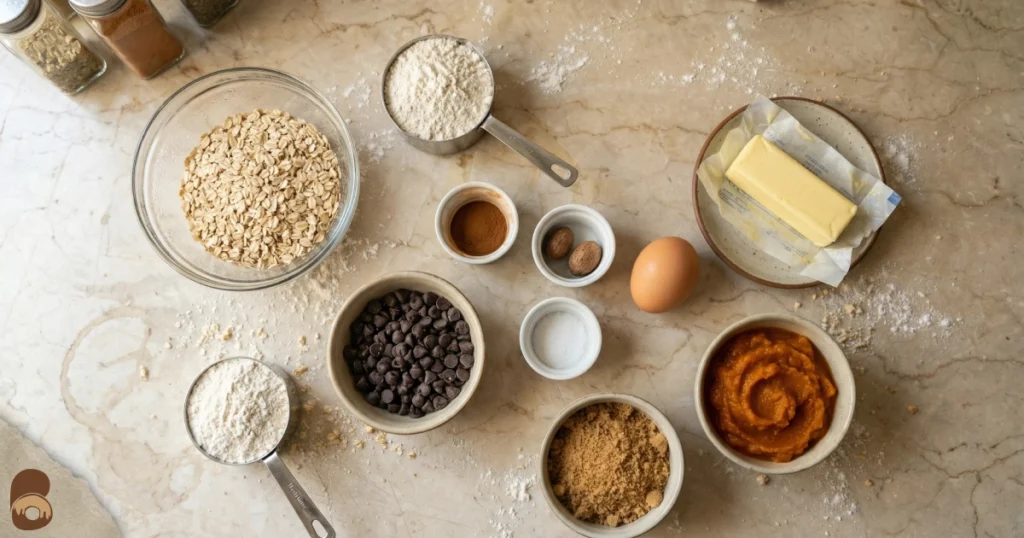
- ¾ cup pumpkin purée, blotted (see method).
- 1 cup packed brown sugar (helps moisture retention without making the dough watery).
- ½ cup butter, melted and cooled (or browned and cooled if you want a deeper flavor).
- 1 large egg.
- 1 teaspoon vanilla extract.
- 1 ¼ cups all-purpose flour.
- 1 ½ cups old-fashioned rolled oats (for chew and structure).
- 1 teaspoon baking soda.
- ½ teaspoon salt.
- 1 ½ teaspoons cinnamon + ¼ teaspoon nutmeg (adjust to taste).
- 1 cup semisweet chocolate chips.
Method (what matters, in order)
- Blot the pumpkin: Spread pumpkin on paper towels and press for 2–3 minutes, replacing towels once if they get soaked.
- Mix wet: Whisk blotted pumpkin, brown sugar, melted-cooled butter, egg, and vanilla until smooth.
- Mix dry: In a separate bowl, combine flour, oats, baking soda, salt, and spices.
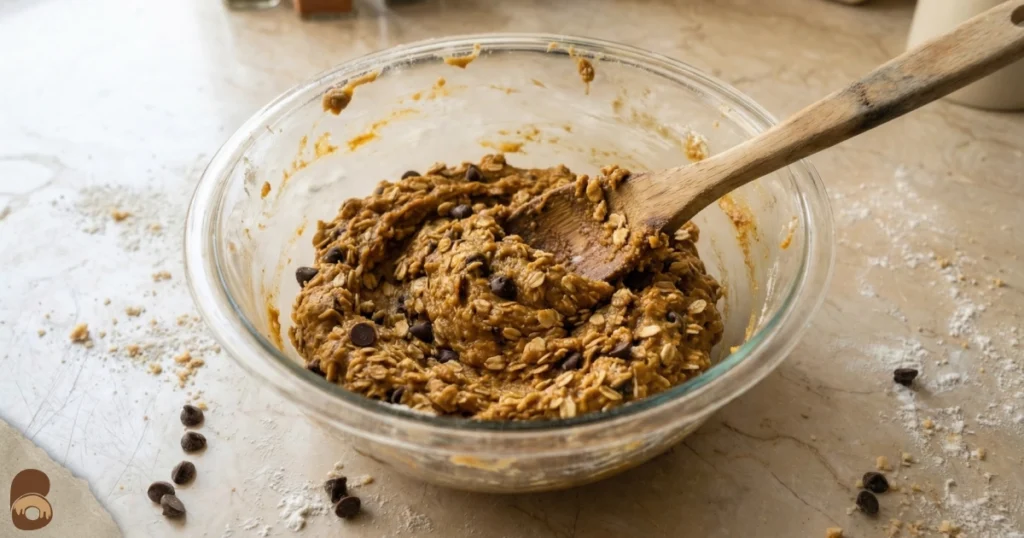
- Combine: Stir dry into wet just until no dry pockets remain (overmixing builds extra structure in a dough that already fights you).
- Fold in chips: Add chocolate chips once the dough is cohesive.
- Chill: Cover and refrigerate 45–60 minutes.
- Bake: Scoop onto parchment-lined sheets (don’t grease the pan) and bake at 350°F / 175°C until edges look set and centers look slightly underdone; cool on the pan a few minutes to finish setting.
Quick adjustment table (so you’re not guessing)
| Problem you want to avoid | What to adjust | Why it works |
|---|---|---|
| Too cakey | Blot longer + add 2–4 Tbsp oats | Excess moisture causes cakey crumb; oats bind water while keeping chew. |
| Spreads thin | Chill longer + ensure butter is cool-to-touch | Cold dough keeps fat solid longer, so cookies set before spreading. |
| Crumbly/dry | Swap 1 Tbsp flour for brown sugar or add 1 tsp milk | Too much dry ingredient imbalance makes a dry finish. |
For the deeper “why pumpkin + oats behave this way,” the pumpkin oatmeal cookie pillar guide breaks down ingredient roles and troubleshooting in one place.
Troubleshooting oatmeal pumpkin chocolate chip cookies
If something went sideways, treat it like a quick diagnosis, not a pep talk: symptoms usually point to one variable.
1) Cakey, muffin-like texture
Root cause: too much pumpkin moisture overpowering the oat matrix.
Fix next batch: blot pumpkin more thoroughly, reduce baking soda by ¼ teaspoon, and add 2–4 tablespoons oats.
2) Spreading into thin blobs
Root cause: wet-to-dry ratio off, butter too warm, or oven not hot enough.
Fix next batch: weigh ingredients if possible, confirm butter is pliable but cool, and make sure the oven is fully preheated before the tray goes in.
3) Pale centers that feel underbaked
Root cause: oven temp running low or inconsistent dough thickness.
Fix next batch: flatten dough portions evenly or increase oven temperature slightly (about 10°F) if your oven runs cool.
4) Crumbly cookies
Root cause: too much flour or not enough moisture-holding ingredients.
Fix next batch: replace 1 tablespoon of flour with brown sugar or add a teaspoon of milk.
FAQs
Q: Can oatmeal pumpkin chocolate chip cookies ever be truly chewy?
Yes—chew comes from managing pumpkin’s free water (blotting) and letting oats hydrate during chilling, so the dough sets like a cookie instead of a quick bread
Q: Why do my oatmeal pumpkin chocolate chip cookies spread more on the second tray?
A warm baking sheet softens dough before it hits the oven, which encourages early spread; cool sheets between batches and line with parchment instead of greasing.
Q: Can I freeze the dough?
Yes—freeze scooped portions, then bake from frozen with a slightly longer bake time; freezing also gives the dough extra hydration time for a more consistent texture.
Conclusion
Oatmeal pumpkin chocolate chip cookies get predictable when pumpkin is treated like hydration, not decoration, and when oats get time to absorb that moisture. Next batch: blot first, chill long enough for oats to hydrate, and keep butter truly “cool room temp.”
For the full framework (ingredient roles, variations, and fixes), use the ultimate pumpkin oatmeal cookies guide as your base, then branch into healthy pumpkin oatmeal cookies when you want lighter swaps without wrecking texture.
Keep creating oatmeal pumpkin chocolate chip cookies. Follow @BakeOrbis on Pinterest for daily baking tips, troubleshooting guides, and techniques that actually work in real kitchens.
Share your experience and help others!
Tried this recipe? Leave a rating and make someone’s day tastier
Be the first to rate this recipe and help others discover it!